Run the two-habit AI checklist that keeps you employable when only 13% get rewarded
A quick checklist helps you act like the top AI users: keep a task human-only and pause before assigning work between AI and people.
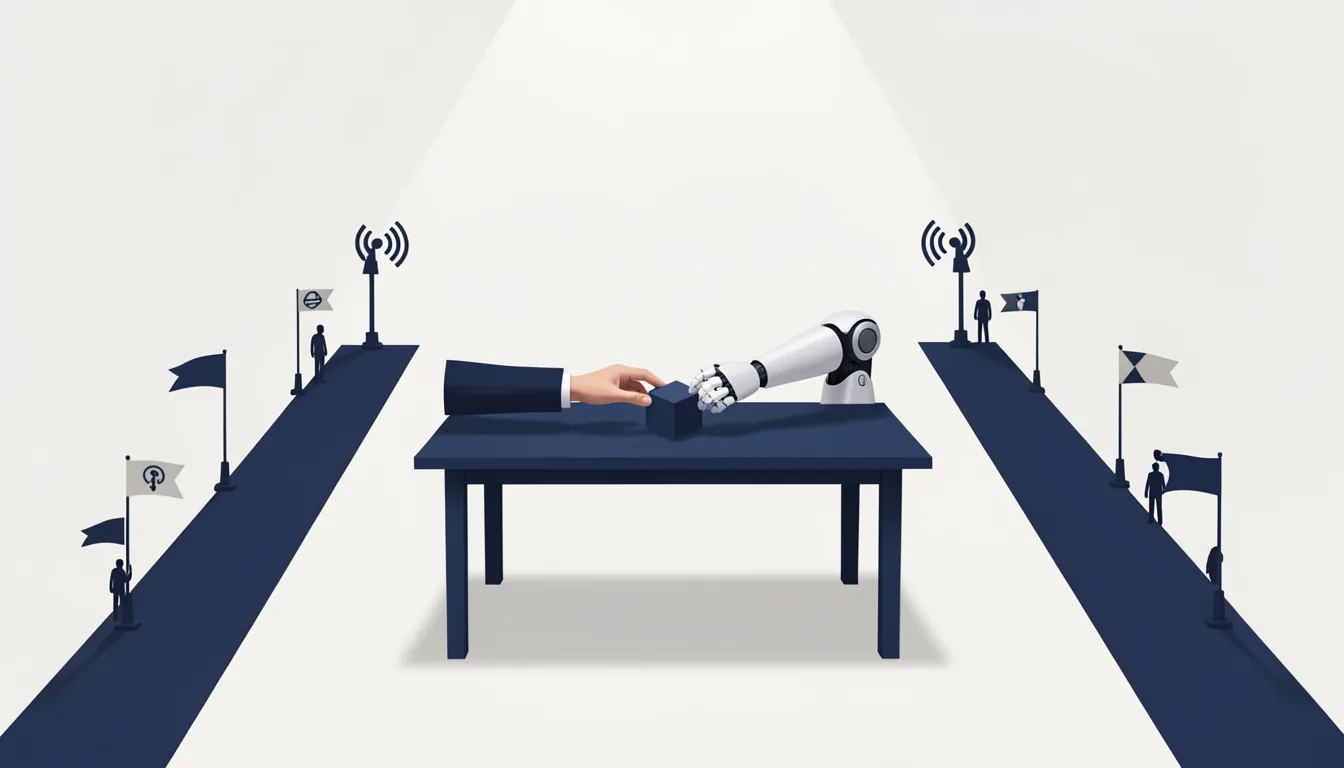
You are using AI at work, but you may not be rewarded for redesigning it. The uncomfortable number is that only 13% of AI users reported receiving a reward for redesigning their work with AI when outcomes were uneven. That gap is a visibility problem. If the work still looks like the old job, AI stays a tool and you stay in the same lane.
The reward gap is a design problem
Microsoft's 2026 Work Trend Index drew on a survey of 20,000 AI-using workers in 10 countries. 65% of AI users reported fear of falling behind if they failed to adapt quickly with AI. That fear is real, but it can push you toward the wrong move: using AI faster without changing how you show up. You may be adding speed to a process that still looks like the old job.
AI agents are moving from experiments to infrastructure. AI agents grew 15x year-over-year, and the growth rate was 18x at large enterprises. That growth changes what a manager expects from you when your job includes coordinating people, tools, and deadlines. You need to show which tasks you are keeping and why.
Two habits separate the top group
Frontier Professionals, the most advanced AI users in Microsoft's 2026 Work Trend Index, accounted for 16% of the surveyed AI users. They managed their own skill base more deliberately.
Frontier Professionals were more likely than non-Frontier AI users to keep some work human-only to maintain skills, at 43% versus 30%. They were also more likely to pause before starting in order to assign tasks between AI and people, at 53% versus 33%. The first habit protects judgment. The second habit protects your role.
Score yourself against the two habits that separate the top group: keep one recurring task human-only, and pause before assigning tasks between AI and people. AI may draft the memo, build the model, or answer the customer. You still need a task where you practice the judgment that makes the output trustworthy. Say you spend a weekly block on a recurring update. Keep an update human-only, not because AI cannot write it, but because the wording is where you show you understand the risk. Before you start, decide what AI will handle and what you will keep. An unclear split means the task is not ready.
The habit becomes visible quickly
Use this before your next AI-assisted task. Each item is small enough to test quickly, and the list is what you keep. Make the habit visible, not just useful.
- Name a recurring task you will keep human-only this week. Pick the task where your judgment is hardest to fake.
- Write a sentence explaining which skill that task protects. A vague sentence shows the task is not specific enough.
- Before starting the next AI-assisted task, mark which part AI will do and which part you will do. Stop and split it when the split is unclear.
- Check whether the split changes quality, speed, or risk. When it does not, you have not redesigned the work; you have only added a tool.
- Record a result you can show this week. Make it visible in a note or a short update when it is not.
AI use is already expected at your job. The checklist shows the difference between using a tool and redesigning a workflow. A manager may ask what you changed. You can point to a task, a split, and a result. Run the checklist before your next AI-assisted task, then keep the human-only task on your calendar for the rest of the week and revisit it at the end of the day.