Reposition as an Accountable Engineer: A 7-Day Proof Stack for Vibe-Coding Job Seekers
Build a 7-day proof stack for spec, debug, review, production ownership, and AI supervision. This is a sprint to build interview evidence, not a guaranteed hire.
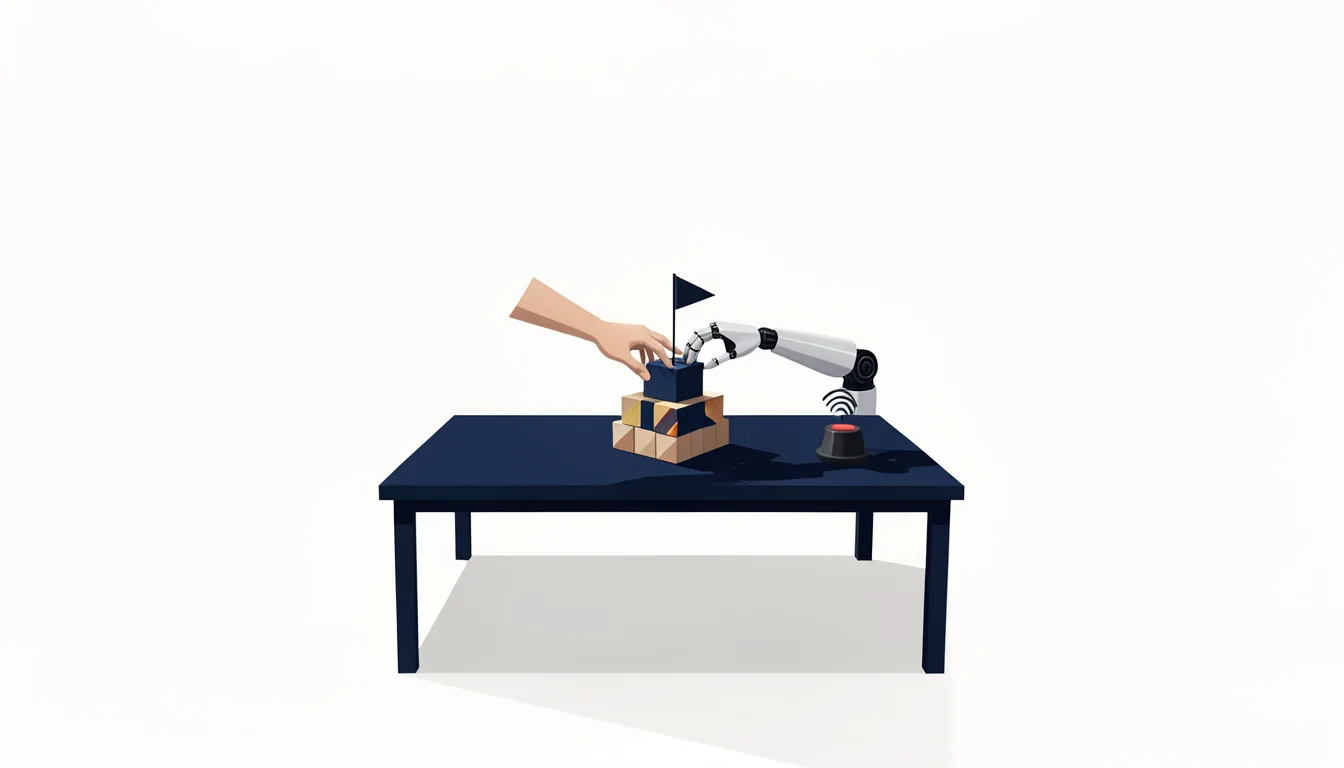
Singapore employers report AI development and AI literacy as the hardest skills to hire. With AI development and AI literacy among the hardest skills to hire, your proof has to show what you do when AI output is wrong. You do not need a perfect portfolio; you need evidence of how you think when tools fail. Your portfolio must answer one question: what did you do when AI output was wrong? That is not a signal that your skills are worthless. It is a signal that you need to show your work.
The evidence supports one point: vibe coding tools can speed up product creation. It does not show that they remove the need for judgment. Your job is to show you can specify a problem, debug a failure, review a change, own a production system, and supervise AI output.
Why vibe coding is not a career strategy
The evidence flags a judgment gap, especially in supervising AI output, so the stack should cover specify, debug, review, own, and supervise.
That gap is your opening. Because employers say AI development and AI literacy are hard to hire, your artifacts should show you can supervise AI output and own the result when tools are wrong, ambiguous, or dangerous.
If organizations are implementing AI without redesigning roles, your artifacts should speak in systems: what should be automated, what should be reviewed, what should be tested, and what should be owned by a human.
The Accountable Engineer Proof Stack
Build five artifacts. Each one should be concrete enough that a hiring manager can see your judgment.
1. Spec: prove you can turn a fuzzy request into a testable plan
Artifact: a one-page specification for a small feature, including user story, acceptance criteria, edge cases, data assumptions, and success metrics. Write it for a real task you have done, or a realistic task from your current role. The point is not the feature. The goal is to make ambiguity visible before code is written. Micro-example: a 3-line spec: '1) User can reset password. 2) Acceptance: email link expires in 15 minutes. 3) Edge case: account locked after 5 failed attempts.'
2. Debug: prove you can trace a failure, not just patch a symptom
Artifact: a short incident note with the symptom, what you checked, what you ruled out, the root cause, and the fix. Include one line on how you would prevent recurrence. If you have no production incident, use a bug that took more than an hour to solve. The value is in the reasoning chain, not the severity. Micro-example: incident-note fields: 'Symptom: checkout timeout. Checked: API logs, DB latency. Ruled out: payment provider. Root cause: missing index. Fix: added index. Prevention: add query performance test.'
3. Review: prove you can catch what AI and junior developers miss
Artifact: a review checklist or a sample pull request review that shows you caught a real issue: a security risk, a performance trap, a missing test, a bad assumption, or a confusing interface. If you have not reviewed code recently, review a public open-source change and write down what you would flag and why. Micro-example: review flag: 'This query runs inside a loop; move it outside or batch it to avoid N+1 latency.'
4. Production ownership: prove you can live with the consequences
Artifact: a runbook, monitoring note, or post-release checklist for a system you have touched. It should answer: what breaks, how you find out, how you roll back, and who is notified. If you have not owned production, document a local service with logs, health checks, and a failure test. The goal is to show you think beyond 'it runs on my machine.' Micro-example: runbook line: 'If error rate exceeds 2% for 5 minutes, check /health, roll back to previous release, and notify on-call.'
5. AI supervision: prove you can judge AI output, not just accept it
Artifact: a short AI review memo. Pick a generated function, test, or migration. List what you verified, what you changed, what you rejected, and what you would never let AI do without human review. This is the point that directly answers the workforce gap in supervising AI tools. Template: AI added a retry loop. Verification: timeout behavior. Change: retry count to 3. Rejection: hardcoded API key.
A 7-Day Proof Stack
This is a sprint to build interview evidence, not a guaranteed hire. A new degree is not the point; the supervision gap is. Use the next seven days to build the stack.
If you are in Singapore, note that Singapore's 2026 Budget includes free premium AI tool access for selected AI training courses. That is useful, but it is not a substitute for proof.
- Day 1: Choose one real feature from your recent work. Write the one-page spec.
- Day 2: Pick the hardest bug you solved in the last six months. Write the incident note.
- Day 3: Review one pull request, or one public change. Write the review memo.
- Day 4: Pick one service or component you have touched. Write the runbook or monitoring note.
- Day 5: Generate a small piece of code with an AI tool. Write the AI supervision memo.
- Day 6: Combine the five artifacts into a single page titled 'Accountable Engineer Evidence.' Add one sentence for each: what it proves about you.
- Day 7: If you start Monday, send the combined evidence, including the AI supervision memo, to one peer by Friday. Ask: Which proof point is weakest, and what unverified AI claim did I miss?
Today, write the one-page spec; by Friday, send the combined page to one peer and ask which proof point is weakest.